From a plane wreck to canyons, from the Blue Cave to shallow reefs, 28 mapped dive sites surround us. Here are the 22 best-loved, each with depth and level notes.
4.8★ · 171 Google reviewsOfficial Partner · SSI Diamond Center16 m boatSea temp 26°CCertified instructors
Highlights
Kaş's best-loved dive sites
The notes are a guide; the day's sites are chosen by our captain and instructors based on wind and sea conditions. Level notes refer to certified diving; first-timers do try dives with an instructor only at the sheltered sites marked with the green badge.
Sea temp right now 26°C
Dakota C-47 Plane Wreck
Depth ≈ 22 mAdvanced
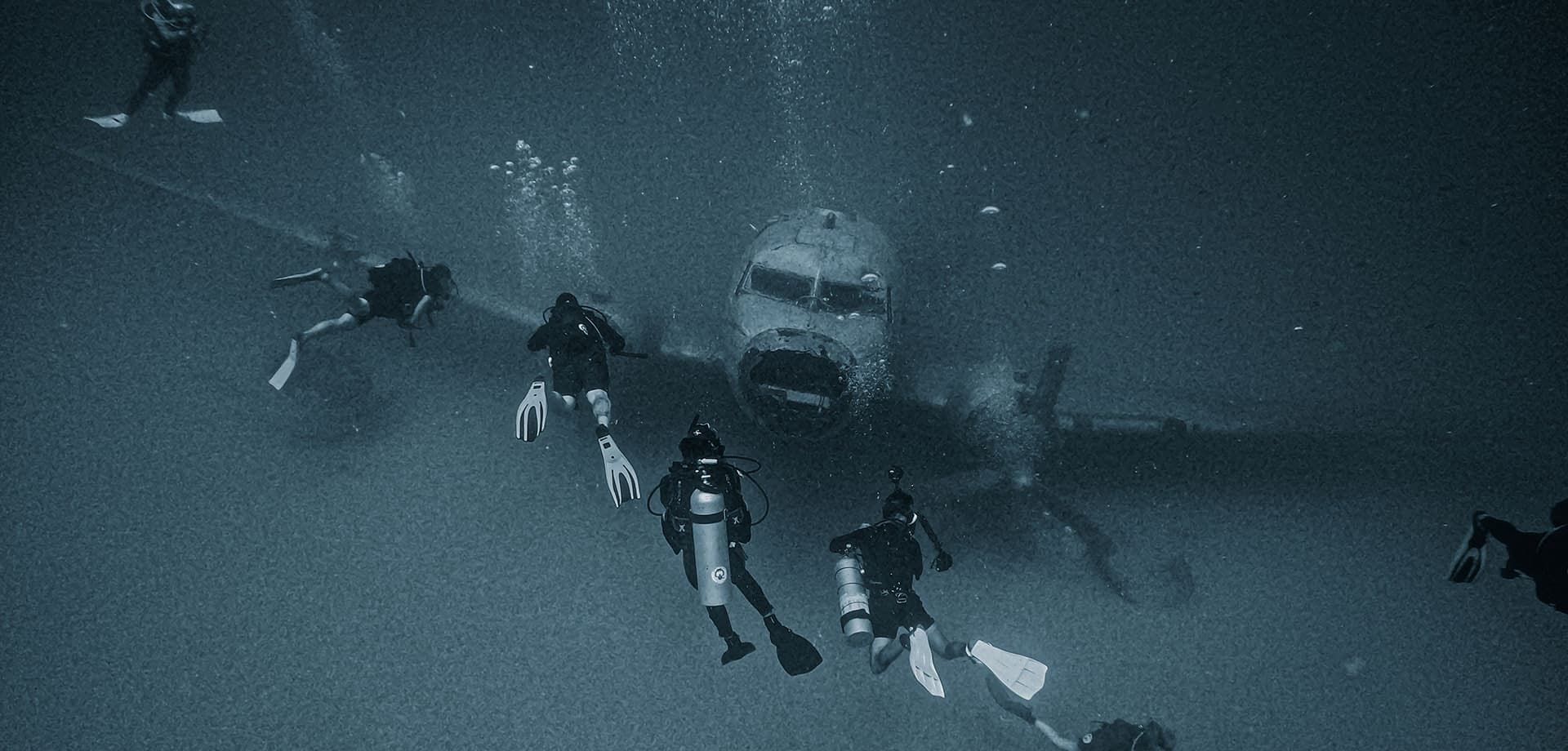
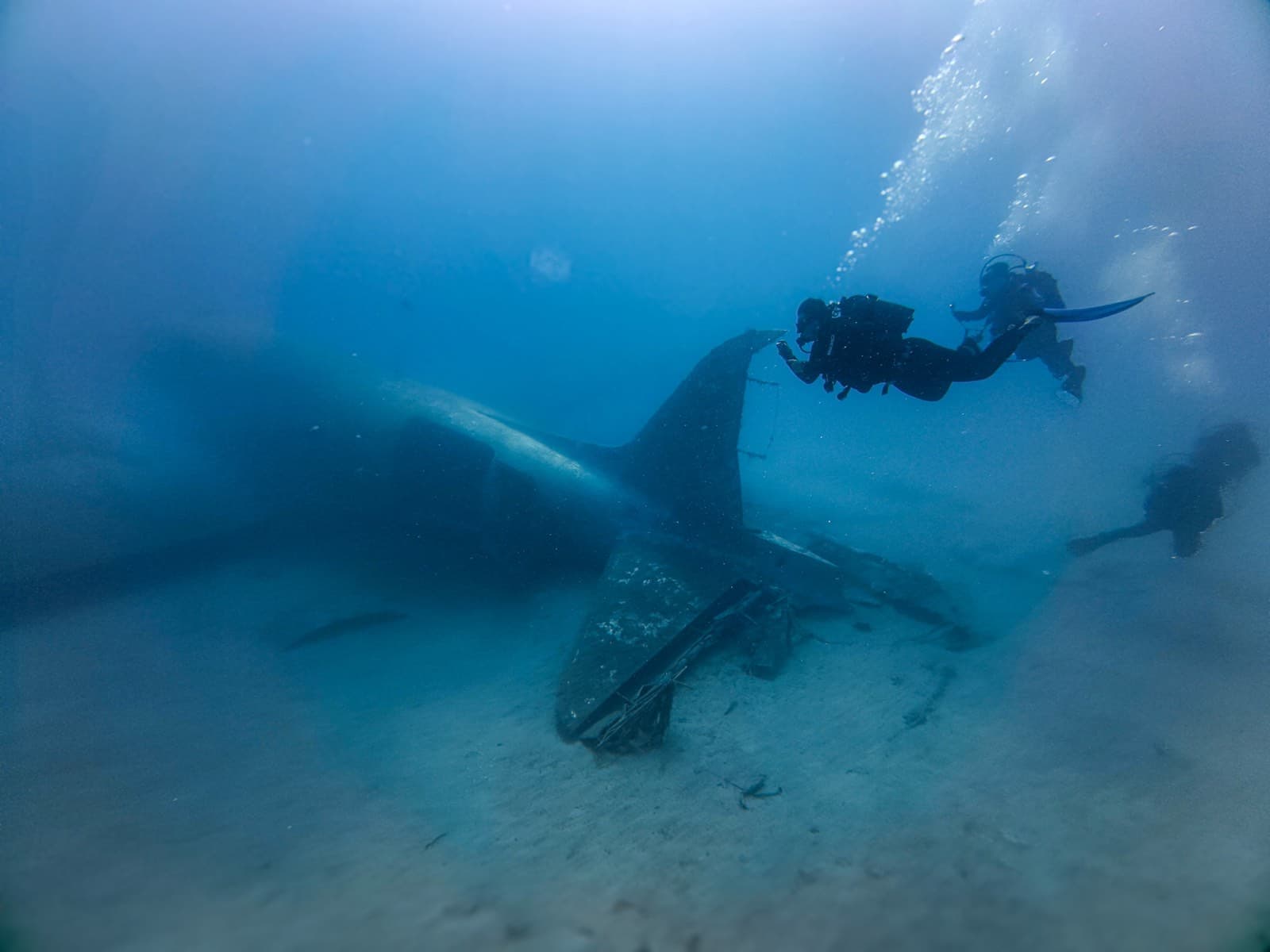
A WWII-era transport plane sunk at 22 m as an artificial reef, the wreck that became Kaş's icon. With a 29 m wingspan and a 20 m fuselage it rests in the Lighthouse area; the cargo section can be entered with a guide.
A real 45-ton, 1960-model tank with its 105 mm gun, sunk as an artificial reef in 2016; one of the world's few divable tank wrecks. Off Pigeon Island, it makes an ideal introduction to wreck diving.
From a natural platform at 5 m you let go and practically fly into the V-shaped passage between two walls. At 25-40 m the 1968 cotton-carrying wreck Dimitri awaits; one of Kaş's favourite dives.
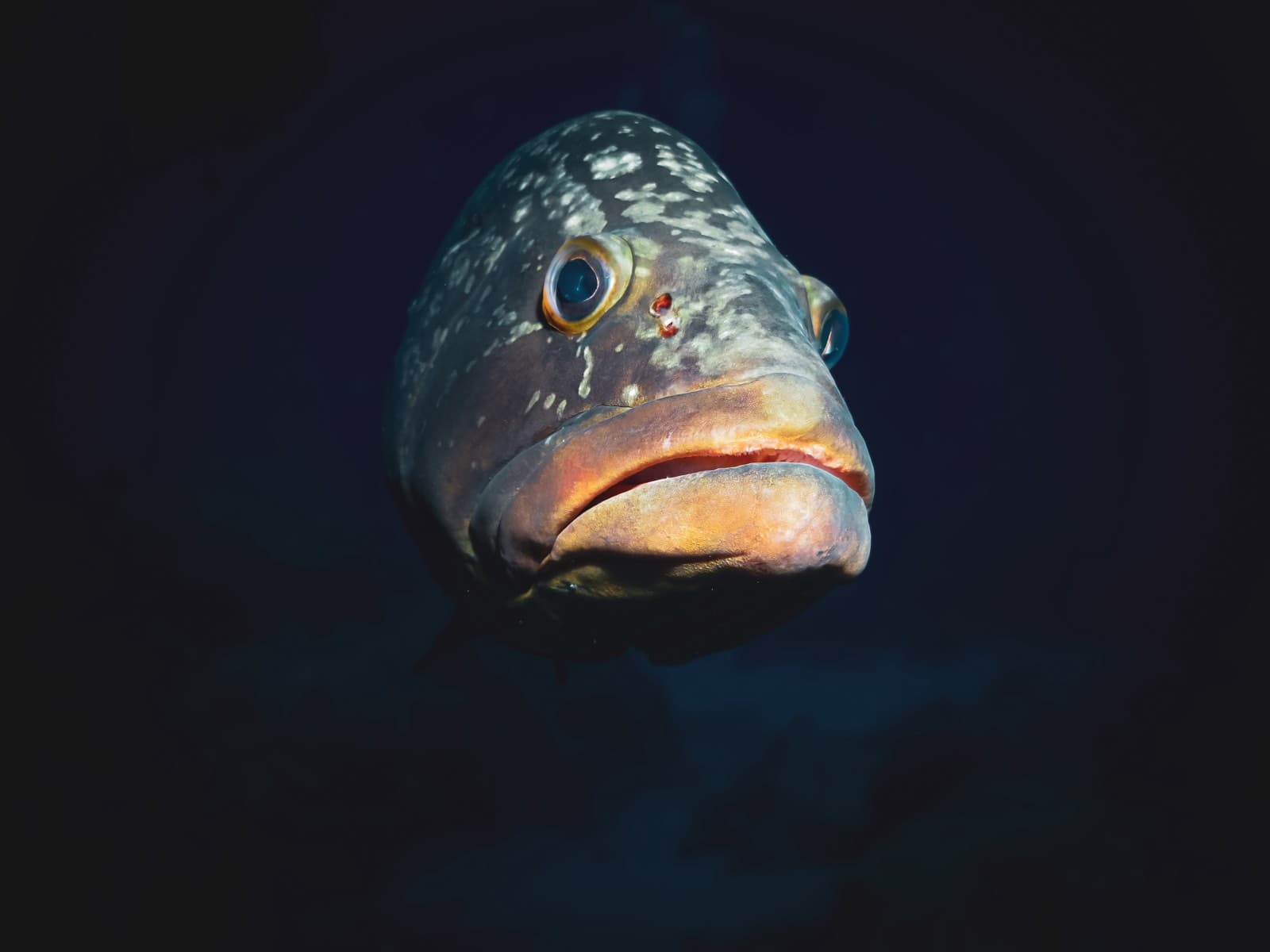
Amphorae, groupers, caretta and barracuda share this reef that tops out at 7 m. The 29 m retired coastguard boat TCSG-119, sunk at 21 m in 2011, rests here too.
The closest and liveliest site to Kaş: from groupers to caretta, guests abound thanks to the fish farm, and it suits night dives too. The Dakota C-47 wreck sits in this area.
The classic sheltered bay for try dives and training; at 18 m a replica of the Uluburun, the oldest shipwreck known, is now home to groupers. The intricate bay to the east earns its nickname "Stonehenge".
Shallow, colourful reefs at 5-20 m in the sheltered bay across the harbour. Calm even on windy days, its waters are ideal for try dives and easy exploration.
A rock rising suddenly from flat sand, named for its abundant life, with a wooden wreck nearby sheltering fish. Right next to the Canyon, it makes the ideal second dive without moving the boat.
The closest site to Meis, named after the WWII Italian SM79 bomber lying at 55-71 m. When the current allows, the wall boils with giant groupers, amberjacks and barracuda; one of the best sites in Turkey.
The reef off the south side of Besmi Island is dived between 4 and 35 m. Occasionally current-swept, it rewards with fine bottom structure and varied fish life; very big, well-protected amphorae rest at around 40 m.
One of the best underwater archaeology showcases around Kaş: amphorae whole and broken plus stone and metal anchors at 7-30 m. Drift east with the westerly current at your back, predators for company.
A mighty cave with its ceiling at 32 m and floor at 44: untouched Neptune's lace and red shrimp colonies; lights a must. With no current here, less experienced divers cruise the shallows above the cave.
A cave with its entrance at 3 m and a cold freshwater spring inside. Diveable between 3 and 30 m; groupers, octopus and moray are regulars, and the wall structure brings surprise encounters.
Cruise west at 20 m to find a 10 m tunnel hidden between big rocks. The formations inside and beyond, with Neptune's lace thick in the dark recesses, make this one to remember.
A broad reef from 13 m down to 45, busy with hunting predator fish. Thanks to the strong southerly current, the show is mostly on the south and southeast slopes.
Two islands split by a shallow pass; the boat ties in by the wind and every dive charts a different route. Seagrass meadows, rocky slopes and passes make each corner its own ecosystem; turtle odds are very high.
A little far but hands down the best wall around: groupers and anthias colonies await on the seemingly endless living descent. The southerly current can push hard; the less experienced stay in the sheltered southern shallows.
Gürmenli offers two good dive sites starting from around 5 m and running down to 40 m, with very old anchors and reefs around them. Usually current-swept, it makes for a very enjoyable wall dive and an ideal day-trip stop.
A reef of historic anchors, some barely distinguishable from the rock; our guides point them out, the local wildlife tags along. For the experienced there is also a barracuda pit at 30 m.
A marble shark sculpture, the wooden wreck "La Villa" at 22 m, a sheet-metal wreck at 25 m and a deep amphora reef: routes for every level. The buoyancy rings along the north shore are great fun too.
Honestly: the sea decides which site we dive on which day. It's confirmed in the morning at the boat, but wherever we go, the route follows the day's best conditions.
A region we're often asked about
Can you dive at Kekova?
Short answer: no. Kekova's sunken city has been protected since 1990 and scuba diving over it is prohibited, so no centre can run a dive tour there. You visit the sunken city from the surface, by boat or sea kayak. For real diving in the region, the address is Kaş: we dive every site on this page from our own boat.
Due to its depth, the Dakota wreck calls for advanced certification and experience. If you hold Open Water, we recommend gaining deep-dive experience with the Advanced course first. Let's plan it together.
Where do try dives take place?
Try dives happen with an instructor at sheltered, shallow, calm sites like Hidayet Bay and Limanağzı. Level notes on the other sites refer to certified divers.
How is the visibility?
Kaş is known for some of Turkey's clearest water; in season visibility is excellent most days. Still, the sea is the sea, and conditions vary day to day.
Can I choose the site in advance?
Do tell us your wishes; we factor them into planning. For your safety, the final call is made in the morning by the captain and instructors based on wind and sea.


 Official Partner · SSI Diamond Center