How to Get Scuba Certified: SSI Step by Step (2026)
How many days does scuba certification take, what does it cost, how does the process work? The whole course process from theory to open-water dives, step by step.
- Scuba certification, diving licence and C-card are names for the same thing
- Entry-level certification (SSI Open Water) fits into 3-4 days
- Three parts: theory + confined-water skills + open-water dives
- SSI certificates are recognised worldwide
- Certification never expires; it's valid for life
- Course prices include materials and the certification fee
Short answer: you complete an entry-level course such as SSI Open Water: online theory, confined-water skills and open-water dives. In Kaş the course fits into 3-4 days, the minimum age at our centre is 12, and your certification is valid for life, worldwide.
What does a scuba certification get you?
A scuba certification is international proof that you're a trained diver. With it you can get tanks filled, rent equipment and join guided boat dives anywhere in the world, including our day diving trips in Kaş. Unlike a discovery dive, a course teaches you to manage a dive yourself: buoyancy control, air management, dive planning and emergency skills.
Never dived and still deciding? Starting with a discovery dive is the most practical first step: one day tells you whether diving is for you.
Certification, diving licence, C-card: are they the same?
Yes. "Scuba certification", "diving licence" and "C-card" all describe the same qualification: the internationally recognised card a trained diver carries. "C-card" is the traditional name for the physical certification card; "diving licence" is the everyday phrase. With SSI the card is digital, so it lives in the app on your phone.
Which systems are recognised? SSI, PADI, CMAS
Recreational diver training runs through a few big systems. SSI (Scuba Schools International) and PADI are the two most widespread international agencies; in Turkey there is also the CMAS tradition under the national federation (TSSF). Entry levels across these systems are built on the same international ISO standards, and dive centres recognise them all: visitors dive in Turkey with their own certification, whichever agency issued it.
So why do we teach SSI? The reasons are practical: the materials are digital and you can finish the theory from your phone before the holiday; your certification lives in the app, so there's no card to lose; the schedule is flexible and bends around your holiday days; and the certification is valid for life, everywhere. We run SSI courses only (no CMAS), and our centre is an SSI Diamond-level facility, the highest centre rating in the system.
Course levels and the current fee for your dates are on our courses page.
The course, step by step
- Theory. Pressure, equipment, safety rules and dive planning. Most of it can be completed online before your holiday, leaving more sea time in Kaş.
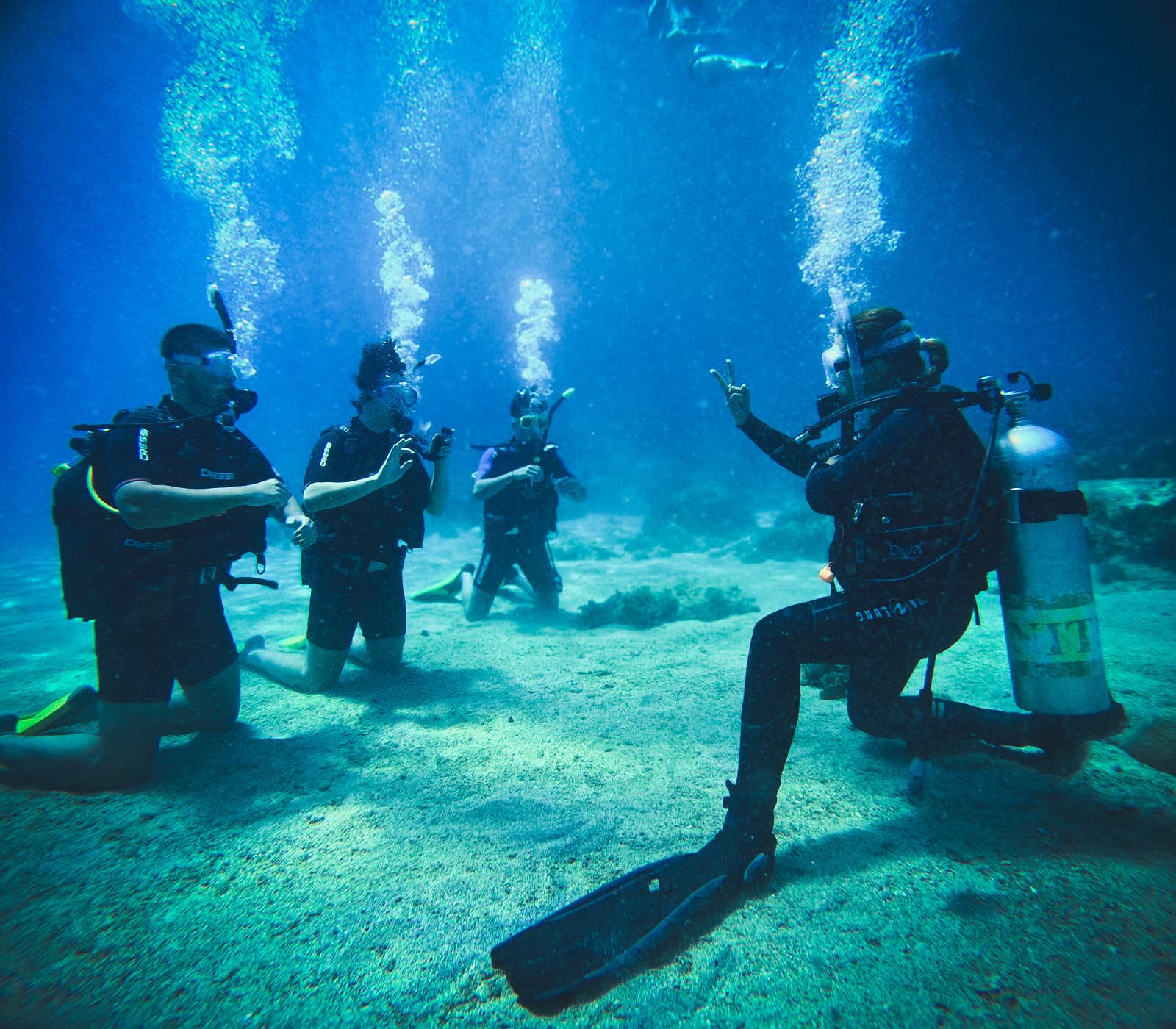
- Confined-water skills. Core skills in shallow, calm water: mask clearing, regulator recovery, buoyancy control. Every skill is demonstrated by the instructor first, then you perform it.
- Open-water dives. You apply everything on real dives in Kaş's sheltered bays and reefs, at progressive depths.
- Certification. Once the skills are complete, your certification is registered digitally. You're now a certified diver, everywhere in the world.
The level map: what comes after
- SSI Open Water: entry level; the training limit is 18 metres, diving with a trained buddy within recreational limits.
- SSI Advanced: deeper dives, navigation, night diving and other experiences; your limit deepens step by step. The Advanced program fits into about 2 days.
- Specialties: wreck, night or deep diving by interest; beyond that lies the professional path.
After certification, practice is the best teacher: build your dive count on day trips, and if you're staying several days, multi-dive packages cut the per-dive cost significantly.
Fitting a course into a holiday
Our most common planning question. A sample week: day 1, arrival and an evening theory review; day 2, confined water plus the first sea dives; days 3-4, the remaining open-water dives and your certification. For the rest of the week you join day trips as a freshly certified diver, or simply enjoy the beach. Leave at least 18 hours between your last dive and your return flight; 24 is the cautious recommendation. What each month feels like is covered in our season guide.
What determines the price of certification?
The main levers are the level (Open Water, Advanced), the number of days and what the package includes. When comparing course prices, ask one question: what's included? With us, training materials and the certification fee are part of the price, as are the boat, equipment and insurance. No "materials fee" surprise at the door. Every course program is listed on our prices page, and we send the exact fee for your dates on WhatsApp within minutes; our complete Kaş diving guide gives the wider budgeting picture.