Your First Scuba Dive: What to Expect on a Discovery Dive
What actually happens on a discovery dive, and is it scary? Honest answers to every first-dive question: ear equalising, panic, not swimming, depth and more.
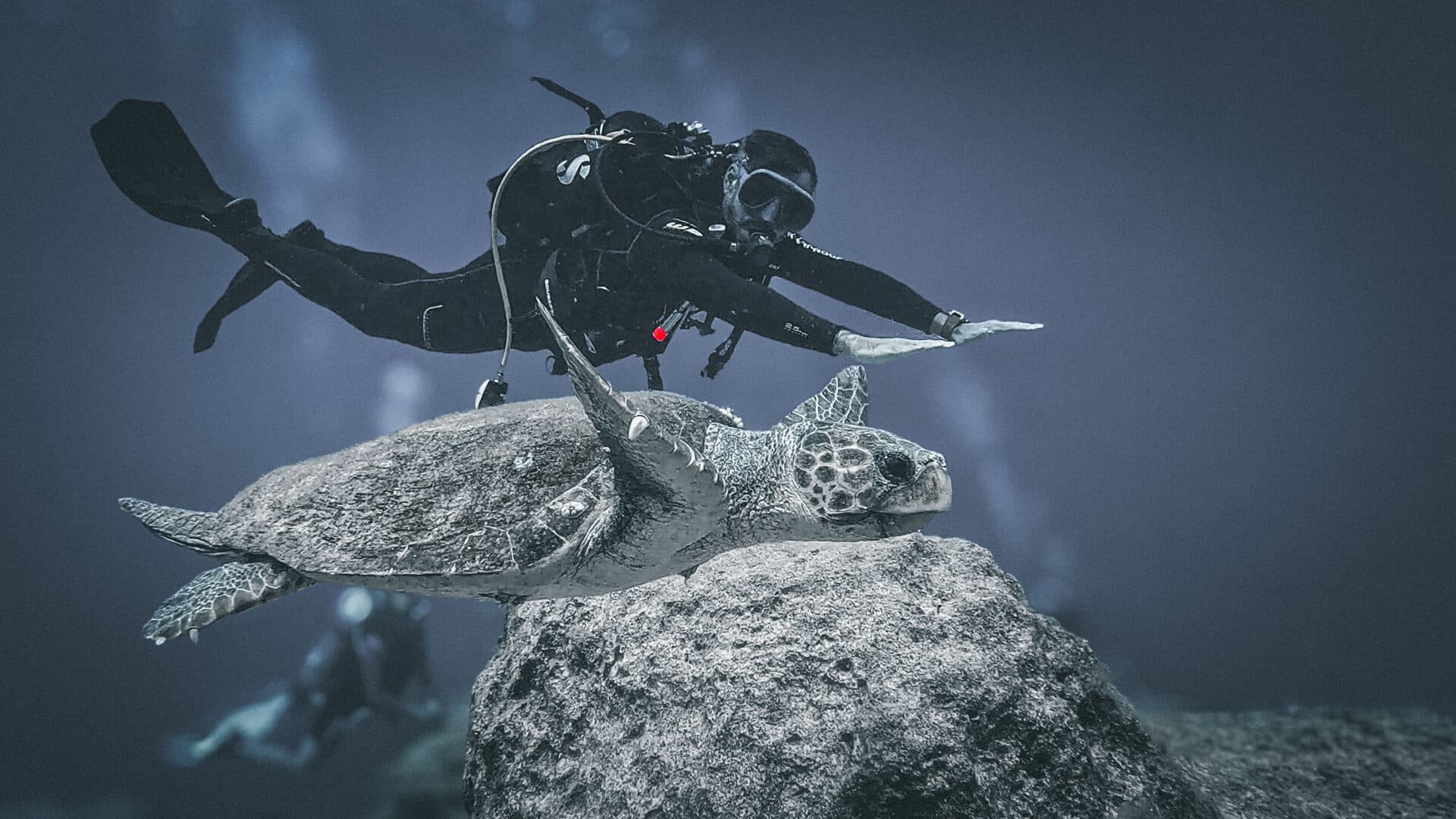
- A discovery dive is a one-day first-dive experience, no certificate needed
- No swimming requirement; your instructor stays one-to-one underwater
- Open to everyone aged 12+, with no upper age limit
- About 25 minutes underwater; set aside half a day in total
- All equipment, the boat and insurance are included in the price
What is a discovery dive?
A discovery dive (Discover Scuba Diving) is a first scuba experience for people who have never dived, made under the close supervision of an instructor, with no certification required. It is not a course: no exams, no theory book, no homework. The goal is simple: to feel, safely, what it's like to breathe underwater.
Kaş is one of the best stages in Turkey for that first time: clear water, sheltered bays and colourful reef life that greets you within the first few metres. The full terms and day flow are on our discover scuba diving page, and we send the exact price on WhatsApp within minutes.
The day, step by step
- Meet at the harbour. We meet on our boat in Kaş Harbour and you fill in a short medical form.
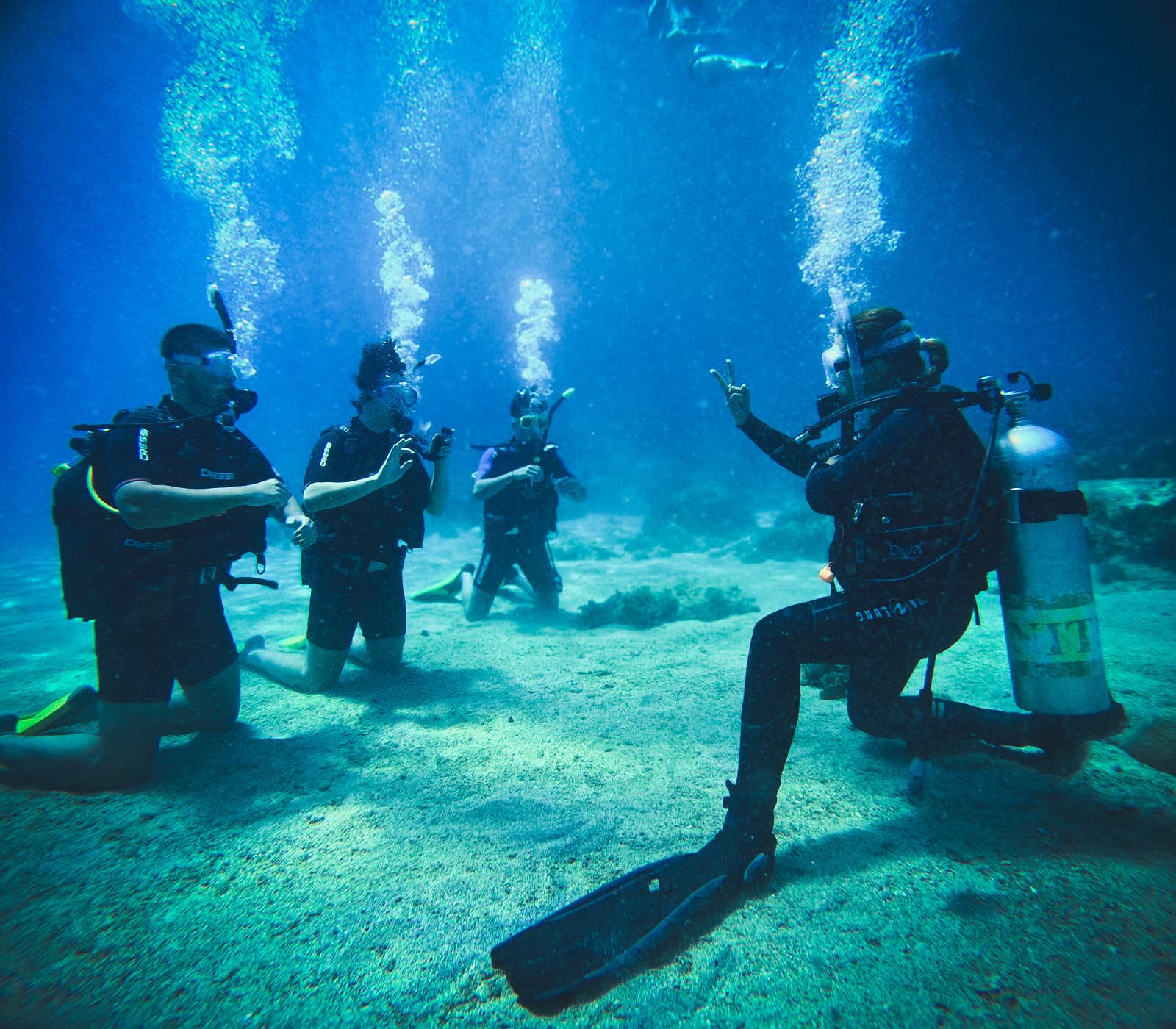
- Briefing. Your instructor introduces the equipment, shows you a few simple hand signals and answers every question you have.
- Shallow-water practice. At standing depth, you get used to breathing from the regulator. This is the most important part of the day, and we never move on until you feel ready.
- The dive. One-to-one with your instructor, about 25 minutes. Fish, reef, and that famous "I'm flying" feeling.
- Boat time. After the dive the day continues at sea with swimming, sunshine and refreshments.
The 5 most common fears, and the truth
"What if I panic?"
The worry we hear most, and the answer is simple: your instructor is within arm's reach at all times. You communicate with simple hand signals and you can end the dive whenever you want. We never push a guest who doesn't feel ready. Sometimes the best dive is the one that starts with ten extra minutes in shallow water.
"I can't swim."
Not required. What matters is being comfortable in water, not swimming technique; your buoyancy jacket keeps you afloat at the surface and your instructor is one-to-one with you below it.
"My ears won't handle the pressure."
Ear fullness is a normal part of diving and is solved with a one-second technique called equalising, explained below. Your instructor sets the descent pace around you: if an ear complains, you stop, equalise, and continue.
"Depth scares me."
A discovery dive is not a deep dive. It takes place at shallow, sheltered sites within the safe limits set by international standards. Underwater, depth also feels very different from how it looks from land; most guests surface saying "I thought we were deeper."
"I feel like I won't be able to breathe."
The regulator gives you unlimited, easy air. After the first thirty strange seconds, breathing becomes something you stop thinking about. That moment, breathing calmly underwater, is usually exactly when people fall in love with diving.
Ear equalising in 30 seconds
As you descend, growing pressure creates a fullness in the middle ear similar to a plane landing. The fix is the Valsalva manoeuvre: pinch your nose gently through the mask and blow softly against it, and you'll feel a small "pop" of relief. The tricks:
- Equalise early and often: before discomfort starts, roughly every metre of descent.
- Never blow hard; gentle, short attempts are enough.
- If an ear won't clear, signal your instructor: you ascend slightly and try again.
- If your nose is blocked (a cold, allergies), postponing the dive is the right call.
Who can join?
- Everyone aged 12 and over, with no upper age limit.
- A short medical form is completed before the dive.
- Tell us about asthma, heart conditions, ear surgery or pregnancy when you book.
- A non-diving companion can join as a boat guest for a day at sea.
Full participation terms are on the discover scuba page; our season guide helps with picking a date.
What if I love it?
A very common "problem". If you surface asking "when can I do this again?", the natural next step is an entry-level course: 3-4 days, and a certification recognised everywhere in the world. You can also add a second discovery dive the same day. Curious how a course works? Read our certification guide, then compare levels on the courses page.